


Land Rover Discovery 4 Instrument Cluster Upgrade: Keep the SUV, Modernize the Cockpit
A Land Rover Discovery 4 Instrument Cluster Upgrade makes most sense when the SUV itself is not the problem. You may already know its maintenance history, trust it on long journeys, use the space regularly and have no reason to replace the whole vehicle simply to gain a newer-looking cockpit.
The frustration is more specific: every time you sit behind the wheel, the analogue instrument area makes the cabin feel older than the rest of the vehicle. That is exactly where a digital-cluster upgrade can have disproportionate value because it changes the part of the interior you look at on every drive without rebuilding the rest of the dashboard.
The current iKAGOO route covers supported Discovery 4 / LR4 models from 2009–2016 and compatible Range Rover Sport L320 models from 2010–2013. The 12.3-inch 1920×720 cluster retains supported vehicle information, works with the original steering-wheel controls, adds built-in CarPlay and uses a Linux-based system with USB software updates. For the correctly matched aftermarket version, no separate vehicle programming is required.
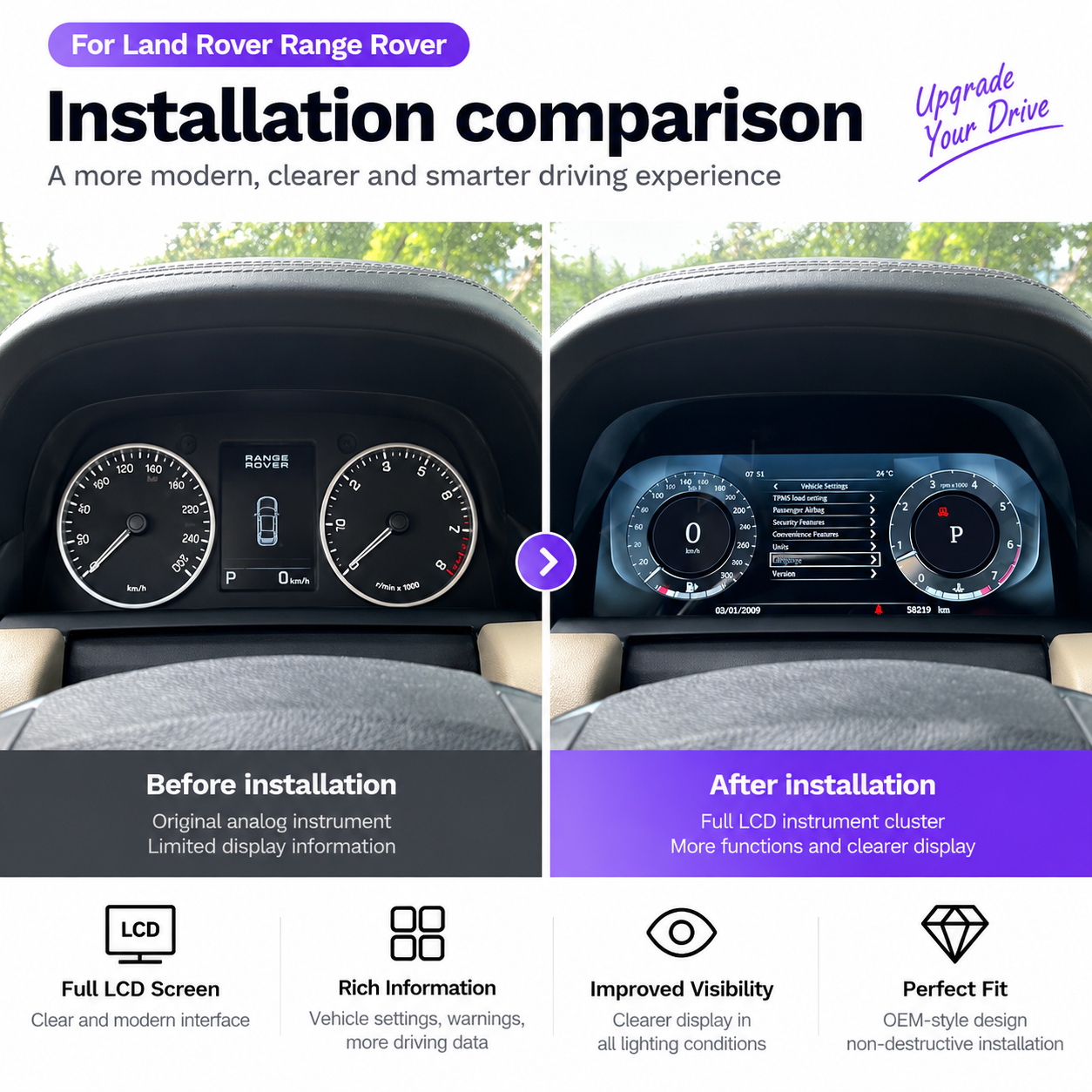
Why replace a Discovery you already understand just to get a newer dashboard?
Many Discovery 4 and LR4 owners are not trying to make an old SUV pretend to be new. They are trying to improve a vehicle that still does a job newer cars do not necessarily do better for them.
If you have owned the vehicle for years, you already know what has been repaired, how the air suspension behaves, which noises are normal, how it drives when fully loaded and what maintenance has already been paid for. A newer used SUV may bring a newer screen, but it also brings another maintenance history you do not know.
That changes the economics of the decision. If the Discovery still suits family use, luggage, towing, long trips or the driving position you prefer, replacing the entire vehicle because one part of the cockpit looks dated is a very expensive way to solve a dashboard problem.
You plan to keep the vehicle.
Then the cost of the upgrade is spread across years of future drives, not a few months before resale.
The cluster is where the age shows most.
The original dashboard can still feel substantial, while the analogue dials immediately reveal the vehicle's generation.
You want a better interface, not another car.
A vehicle-specific cluster targets exactly the part of ownership that feels outdated without changing the SUV you already trust.
A Discovery 4 digital dashboard upgrade cannot trade useful vehicle information for better graphics.
The visual transformation is what gets your attention. Vehicle information is what determines whether the upgrade still feels worthwhile after the novelty is gone.
On a short test drive, almost any large digital screen can look impressive. On a four-hour journey, while towing, during poor weather or when a vehicle warning appears, the instrument cluster has a different job: it must keep the information you actually rely on clear and understandable.
Speed, RPM and mileage remain central.
These are not secondary features. They are the basic reason the display exists in the driver's normal field of view.
Fuel, warnings and door information still matter.
A prettier display is not an upgrade if the driver loses practical information that the original cluster provided.
TPMS and supported 4WD data belong here too.
This is especially relevant on a vehicle that may be used loaded, on long-distance trips or away from ideal road conditions.
The current iKAGOO cluster supports vehicle information including mileage, warning information, fuel-consumption data, tyre-pressure information, door status and supported four-wheel-drive information. The exact data available still depends on the supported original vehicle configuration.
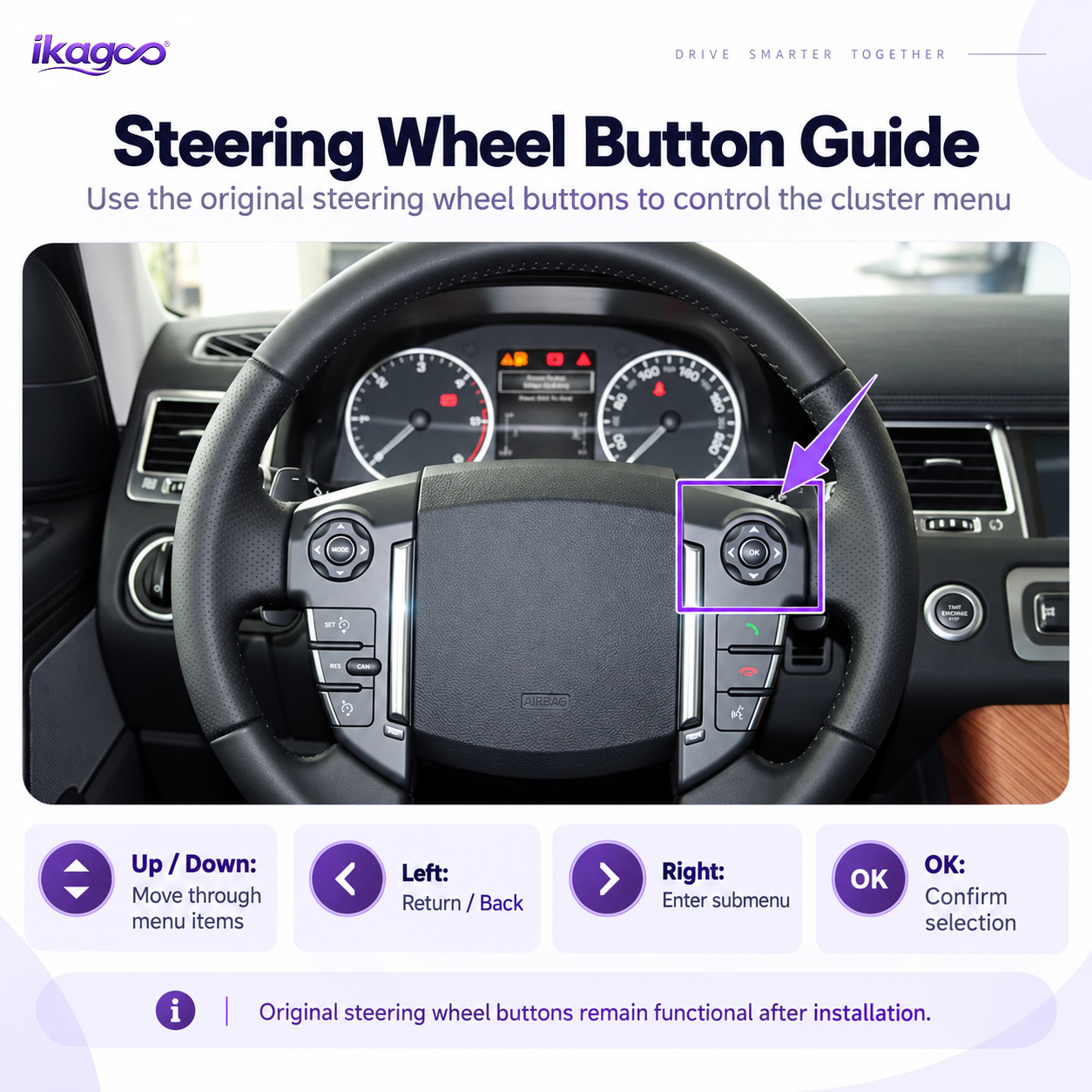
The upgrade should not make familiar steering-wheel controls less useful.
After years in the vehicle, you already operate the steering-wheel buttons without thinking about them. An aftermarket upgrade becomes irritating very quickly if changing a cluster page means reaching for another controller or learning a completely different interaction.
The supported iKAGOO route keeps the original steering-wheel buttons involved in menu operation. That makes the new display feel more integrated because you are modernizing the information area without discarding the controls already built into the vehicle.
This is another reason not to compare clusters only by resolution or price. Integration becomes more important after installation than it looked while comparing front-view product photos online.
Discovery 4 TFT retrofit: OEM donor cluster or vehicle-specific iKAGOO route?
A genuine Range Rover TFT donor cluster has obvious appeal. Discovery owners have successfully completed these retrofits, and for an enthusiast who specifically wants OEM hardware, the project itself can be part of the attraction.
But the donor cluster is only the beginning. Discovery-owner retrofit threads document projects involving programmer or EEPROM work, VIN and mileage data, CCF changes, diesel/petrol display configuration and physical modification around the original cluster opening. Some owners describe the programming as manageable but the physical fitting as the time-consuming part.
Do you want to build an OEM retrofit project, or do you primarily want the finished digital cockpit? The iKAGOO route is aimed at the second buyer: vehicle-specific aftermarket hardware, supported original data and no separate vehicle programming requirement for the correctly matched version.
| Domanda d'acquisto | Percorso iKAGOO | OEM donor TFT retrofit |
|---|---|---|
| What are you buying? |
A prepared vehicle-specific upgrade route. Product version, vehicle information and later support remain linked to the order. |
An OEM donor component that still has to become a completed retrofit. |
| Programmazione |
Nessuna programmazione separata del veicolo per la versione correttamente abbinata. Physical installation, setup and testing are still required. |
Owner projects document EEPROM/programmer work, VIN or mileage data and CCF configuration. |
| Montaggio fisico | Housing and mounting geometry are designed around the supported Discovery 4 / LR4 application. | Some documented conversions require trimming around the cluster, support structure or mounting area. |
| Dati del veicolo | Designed around supported Discovery vehicle information such as fuel, warnings, TPMS and 4WD data. | Final behavior depends on donor-cluster configuration and the receiving vehicle. |
| Who supports it later? |
One order remains the technical reference. Vehicle review, supplied version and troubleshooting context stay together. |
Donor seller, programmer, installer and diagnostics specialist may all be different people. |
| Ideale per | Owners who want the modern cockpit result without making the cluster conversion a separate engineering project. | Enthusiasts who specifically want OEM TFT hardware and are comfortable completing the retrofit work. |
Screen size sells the idea. Housing, mounting points and connectors decide whether the retrofit actually works.
Two listings can both say “12.3-inch digital cluster” while representing very different levels of vehicle integration. The useful comparison starts behind the display.
The cluster has to occupy the original instrument location, match the physical mounting route and communicate with supported original vehicle systems. That is why the back of the product matters just as much as the interface shown on the front.
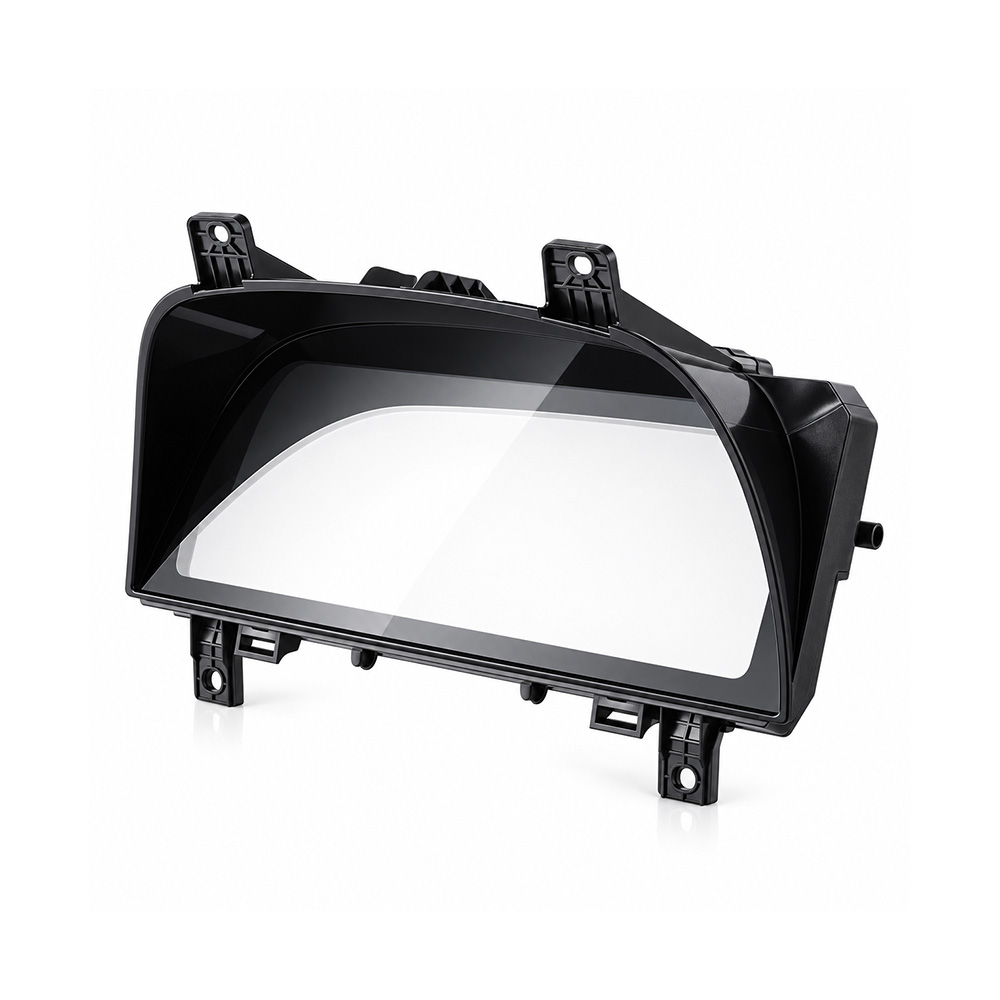
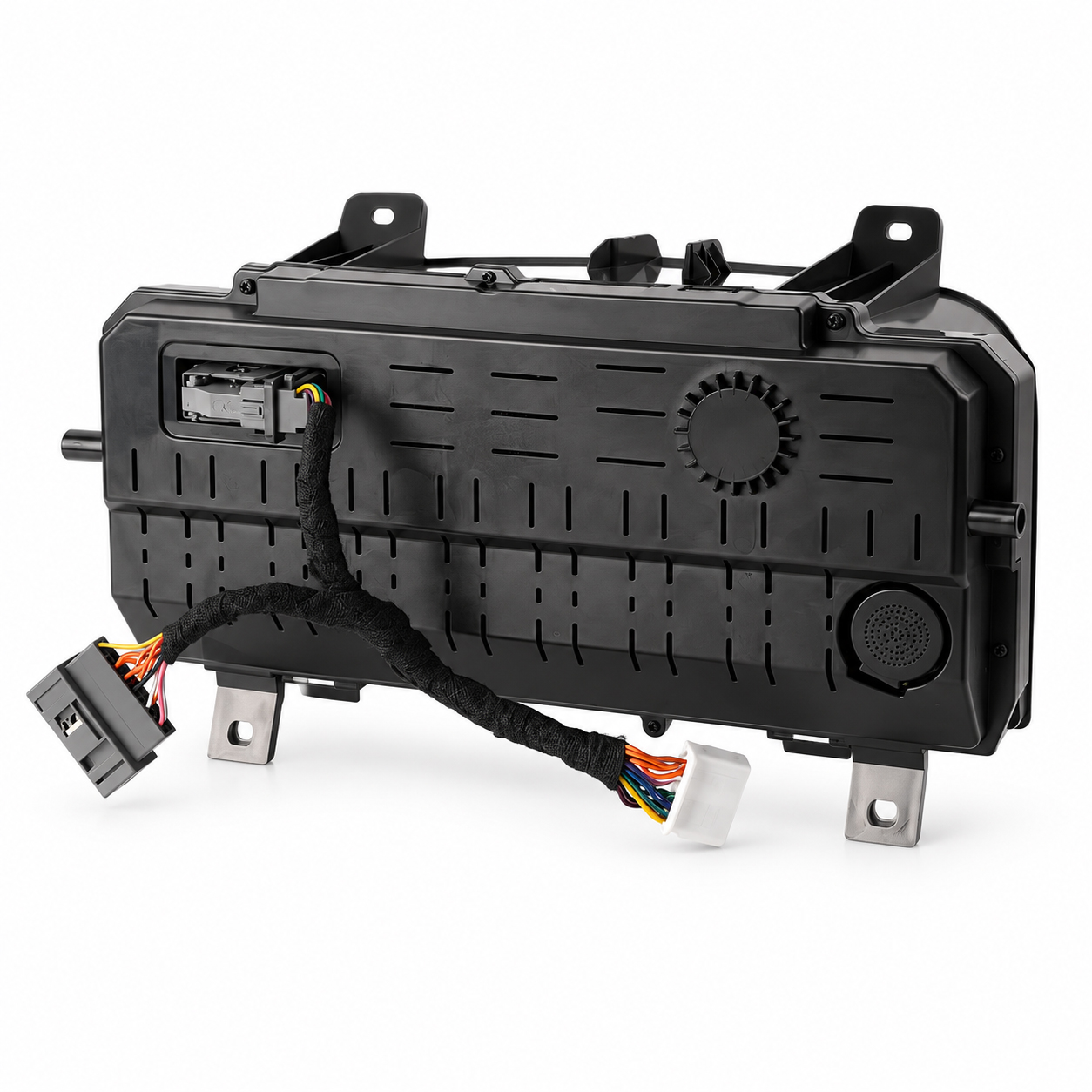
iKAGOO's compatibility review is useful because the product is not treated as “a Land Rover screen.” When confirmation is required, model, year, steering position, market and original-cluster information are used to identify the correct route before preparation.
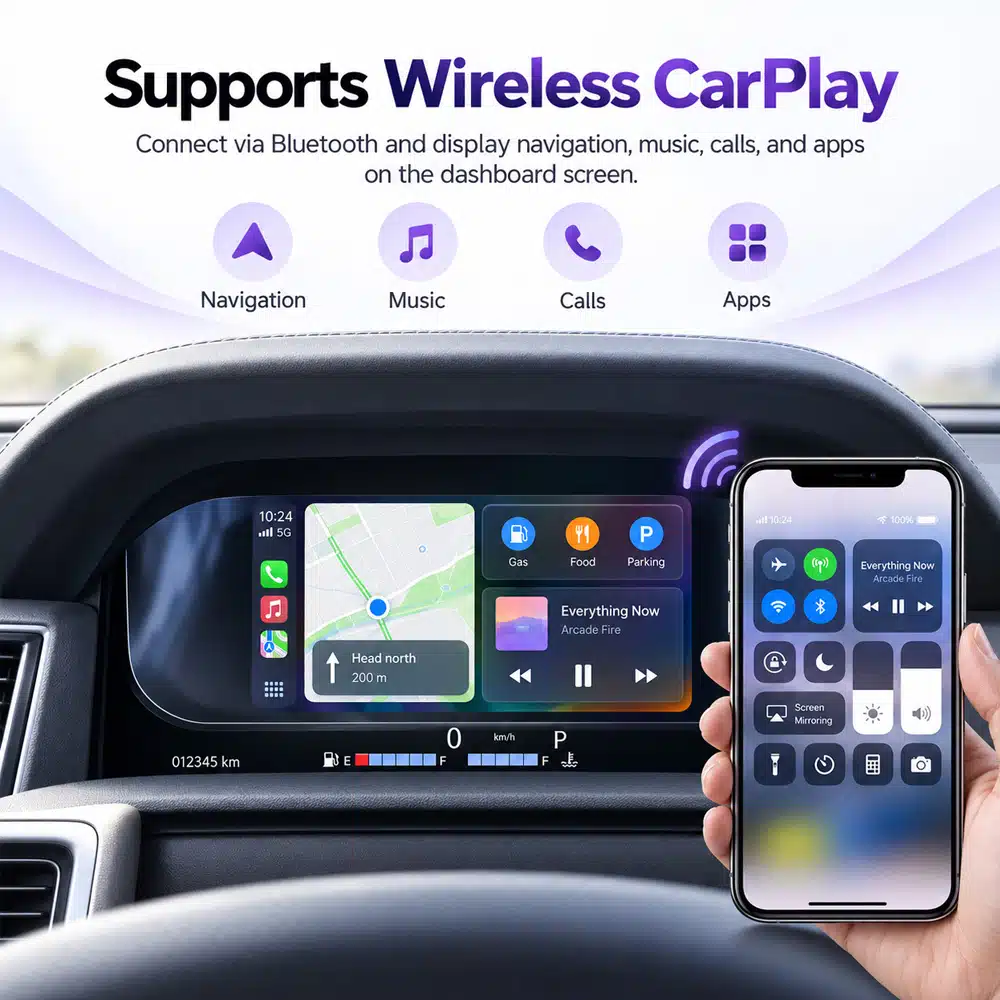
CarPlay is useful, but it should be added to a proper instrument cluster—not replace one.
CarPlay is an attractive benefit on a Discovery 4 because the vehicle predates the phone-integration experience many drivers now use every day. Navigation, music and calls can make the cockpit feel significantly more current.
But CarPlay alone is not enough reason to recommend changing the instrument cluster. The stronger result is when connected phone functions sit on top of a display that still performs its primary job: showing supported driving and vehicle information.
That distinction matters. The customer should not gain Apple CarPlay while losing practical information that made the original Land Rover cluster useful.
Four display styles matter because different drives do not need the same information emphasis.
The current cluster provides Simple, Comfort, Technology and Track display styles. The value is not that the dashboard can “change colors.” It is that the owner is not locked into one aftermarket graphic layout for the life of the product.
A cleaner layout can make sense during normal commuting or long-distance driving, while a more gauge-focused style can suit an owner who prefers a stronger performance-oriented view. The 1920×720 display gives the layout enough horizontal space to separate major information rather than compressing everything into a small central window.
The anti-glare screen surface also matters in actual use. A large LCD looks impressive indoors, but its real value depends on remaining readable when daylight reaches the dashboard. That is one of the reasons display usability matters more than simply advertising screen size.
Discovery 4, LR4, L319 and Range Rover Sport L320: which vehicles are we actually talking about?
Search terminology changes by country, but compatibility still depends on the actual vehicle.
In the UK, Europe, Australia, New Zealand and many other markets, buyers usually know the vehicle as the Land Rover Discovery 4. The chassis/generation term L319 is also common in enthusiast and technical discussions.
In the United States and Canada, the same Discovery 4 generation was sold as the Land Rover LR4. This is why North American buyers frequently search for “LR4 instrument cluster upgrade” or “LR4 digital dashboard” even though the product family is the same Discovery 4-generation route.
The current iKAGOO product route is listed for supported Discovery 4 / LR4 2009–2016 vehicles. A separate compatible application is listed for supported Range Rover Sport L320 2010–2013.
Discovery Sport is not the same vehicle. The word “Sport” in the compatible application refers to Range Rover Sport L320, not the later Land Rover Discovery Sport platform.
When compatibility needs confirmation, provide the exact model and year, LHD or RHD steering position, original vehicle market and a clear powered-on photo of the original instrument cluster. Badge name alone is not as useful as the actual dashboard and vehicle configuration.
No separate vehicle programming does not mean there is no installation work.
For the correctly matched current iKAGOO version, no separate vehicle programming is required. That is an important difference from many OEM donor-TFT retrofit projects.
The original cluster still has to be removed correctly, the vehicle-specific connections fitted, the supplied cluster configured, and the important vehicle functions tested before all dashboard trim is reinstalled.
Confirm the actual vehicle.
Verify model, year, steering position and the original cluster route before the dashboard is opened.
Install the matched hardware carefully.
Avoid forcing connectors or closing the dashboard before the new display has been fully tested.
Test the functions you actually need.
Check speed, RPM, mileage, fuel, warnings, steering controls, TPMS, supported 4WD data, units and CarPlay.
Vedi la Libreria della guida all'installazione iKAGOO e il Compatibility & Installation Guide before installation.
A similar-looking cluster can be cheaper. The harder question is what happens when you need help six months later.
With vehicle electronics, the value of the seller becomes more visible after delivery than it was on the product-comparison page.
An installer may need to know which product version was supplied. A later software question may depend on the exact hardware revision. A replacement part may need to match the original order. Those situations are easier to handle when the order still contains the vehicle and product context.
iKAGOO's current order process records the purchased product and then performs product-specific compatibility review before the final matched kit is prepared. For digital clusters, that review can include vehicle model and year, original-cluster information, dashboard photos, market and steering position.
Eligible hardware is covered by the current published Garanzia limitata di 12 mesi sull'hardware. The original order remains the reference after the commercial warranty period for product identification, troubleshooting, compatible-parts investigation, software guidance and repair coordination where applicable.
Land Rover Discovery 4 Instrument Cluster Upgrade FAQ
What years does the Land Rover Discovery 4 Instrument Cluster Upgrade support?
The current iKAGOO product route is listed for supported Discovery 4 / LR4 vehicles from 2009–2016. Compatible Range Rover Sport L320 applications are listed for 2010–2013. Final matching can still depend on actual vehicle configuration, market and steering position.
Is the Land Rover LR4 the same generation as Discovery 4?
Yes. LR4 is the North American market name for the Discovery 4 generation. US and Canadian owners therefore often search “LR4 instrument cluster upgrade,” while UK, European and Australian owners usually search “Discovery 4 instrument cluster upgrade.”
What does L319 mean?
L319 is commonly used as the Discovery 3 / Discovery 4 platform or generation reference. It helps distinguish this vehicle family from later Discovery generations when researching parts and retrofit information.
Does this product fit Land Rover Discovery Sport?
No. Discovery Sport is a different later vehicle platform. The compatible “Sport” application here means Range Rover Sport L320, not Discovery Sport.
Does the Discovery 4 digital cluster require vehicle programming?
No separate vehicle programming is required for the correctly matched current iKAGOO aftermarket version. Physical installation, configuration, connection checking and final function testing are still required.
Why is an OEM Range Rover TFT retrofit more involved?
Independent Discovery-owner projects document work involving donor-cluster programming, EEPROM or programmer tools, CCF changes, vehicle data and physical adaptation around the original cluster area. The iKAGOO route is a vehicle-specific aftermarket product rather than a used OEM donor-cluster conversion.
What original vehicle information does the iKAGOO cluster support?
The supported route includes core driving information such as speed, RPM and mileage, plus supported warning information, fuel data, door status, tyre-pressure information and four-wheel-drive information. Exact available information can depend on the original vehicle configuration.
Do the original Discovery 4 steering-wheel controls still work?
Yes. The current supported route retains the original steering-wheel button functions used to navigate the cluster interface.
Does the Discovery 4 digital instrument cluster support CarPlay?
Yes. Built-in CarPlay is supported on the current platform for compatible navigation, music, calls and phone functions. It is an additional capability; the cluster remains primarily a driver and vehicle-information display.
Is this an Android digital instrument cluster?
No. The current cluster platform uses a Linux-based system. Its primary role is the driver-information display rather than acting as a generic Android tablet in the instrument position.
What display themes are available?
The current product provides Simple, Comfort, Technology and Track interface styles. They allow the owner to choose a cleaner everyday layout or a more gauge-focused visual presentation.
How is the Discovery 4 digital cluster software updated?
The supported update method uses a USB flash drive. Only software intended for the specific supplied hardware version should be installed. The original iKAGOO order helps identify the product revision when software guidance is needed later.
Cosa devo inviare a iKAGOO prima di effettuare l'ordine?
Provide the exact model and year, LHD or RHD steering position, vehicle market or country, and a clear powered-on image of the original instrument cluster when compatibility confirmation is requested.
Why buy from iKAGOO instead of a cheaper similar-looking listing?
Because the useful purchase is not only the front LCD. iKAGOO keeps the vehicle review, supplied product version, order preparation, installation support, warranty record and later product identification tied to the original order. Eligible hardware follows the current published 12-month limited hardware warranty, while software guidance, compatible-parts investigation and repair coordination may continue afterward where applicable.
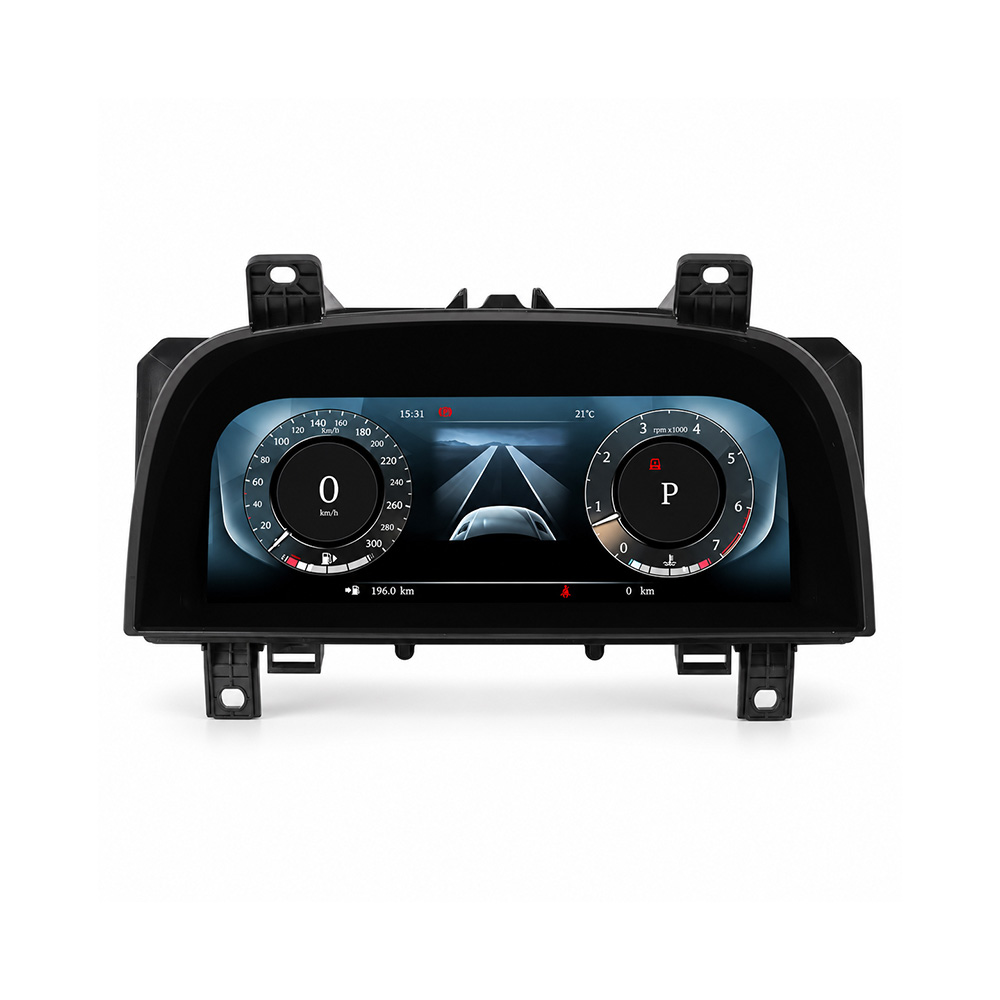
Keep the Discovery you know. Modernize the information you see every day.
If the vehicle still suits the way you drive, this upgrade targets the part of the cabin that has aged faster than the reason you still own it.
Il iKAGOO Land Rover Discovery 4 Digital Instrument Cluster combines a 12.3-inch 1920×720 digital display with supported original vehicle information, original steering-wheel controls, a Linux-based system, USB software updates and built-in CarPlay.
For the correctly matched aftermarket version, no separate vehicle programming is required. More importantly, the purchase remains tied to a known vehicle and product record after delivery, giving installation and future support a clearer starting point than an unidentified similar-looking cluster.
iKAGOO — Precision Fit. Premium Design. Professional Upgrades.








Add comment
Devi essere connesso per inviare un commento.